
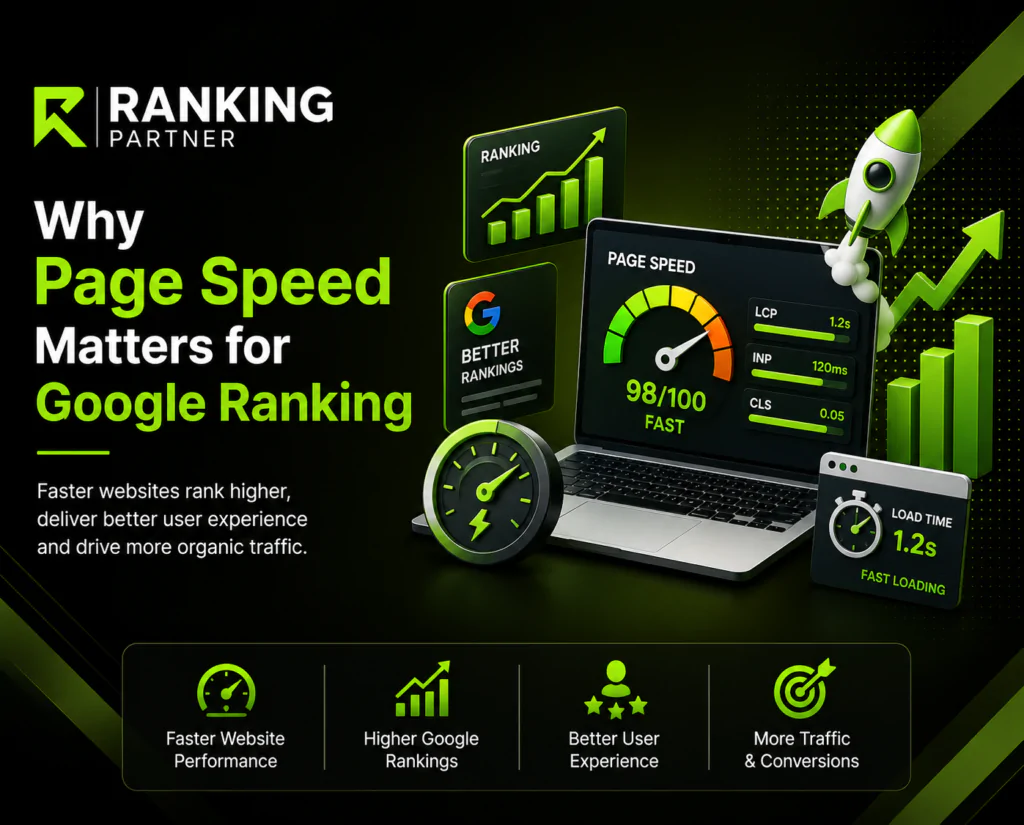
In 2026, Page Speed is an important part of a website’s SEO and user experience. A slow website can make visitors leave quickly, while a fast website helps users access content, services, and important information without unnecessary waiting.
Google also considers page experience and Core Web Vitals as part of its search systems. However, Page Speed is only one part of SEO, so businesses should combine website performance with helpful content, technical SEO, mobile usability, and search intent.
What Is Page Speed and Why Does It Matter for SEO?
Page Speed refers to how quickly a web page loads and becomes usable for visitors. It depends on several elements, including images, hosting, JavaScript, CSS, server response time, and third-party scripts.
Good website loading speed creates a smoother experience and can support better engagement and conversions. For businesses competing in Google Search, improving speed should therefore be part of their overall page speed optimization strategy. For example, the best digital marketing company in Indore can help businesses optimize website performance, improve user experience, and strengthen their overall search visibility.
Does Page Speed Affect Google Rankings in 2026?
Yes, Page Speed can affect Google rankings, but it is not a standalone ranking factor that guarantees higher positions.
Google uses multiple systems and signals to evaluate web pages. Page experience and Core Web Vitals can contribute to search performance, but relevant and useful content remains essential. This means a fast website with poor content will not automatically outrank a slower website that provides significantly better information for the user’s search.
How Do Core Web Vitals Affect SEO?
Core Web Vitals measure important aspects of the experience users have when visiting a website. They focus on loading performance, responsiveness, and visual stability.
The three key metrics are:
- LCP: Measures how quickly the main content loads.
- INP: Measures how quickly a page responds to user interactions.
- CLS: Measures unexpected movement of content while a page loads.
Why Is Website Loading Speed Important for Users?
Visitors expect websites to load quickly, especially on mobile devices. When a page takes too long to become usable, users may leave before reading the content or completing an enquiry.
Better website loading speed can help businesses:
- Improve user experience
- Reduce frustration
- Improve mobile browsing
- Increase engagement
- Support better conversions
- Create smoother website navigation
For service-based businesses, this can directly affect the number of visitors who turn into enquiries.
How Can You Improve Page Speed for SEO?
Improving Page Speed starts with identifying what is making your website slow. Tools such as Google PageSpeed Insights and Search Console can help you understand performance issues and Core Web Vitals.
Some effective improvements include:
Can Image Optimization Improve Page Speed?
Yes. Large image files are one of the common reasons for slow pages.
Compress images, use modern formats such as WebP or AVIF, resize images correctly, and use lazy loading for images that are not immediately visible.
Can JavaScript Optimization Improve Website Speed?
Excessive JavaScript can delay page loading and user interactions. Removing unnecessary scripts, reducing unused code, and delaying non-essential scripts can improve responsiveness.
Does Website Hosting Affect Page Speed?
Yes. Your hosting environment can affect server response time and overall performance. Good hosting, caching, database optimization, and a suitable CDN can help improve website performance optimization, especially for websites receiving visitors from different locations.
What Are the Best Ways to Optimize Website Speed in 2026?
The best approach is to focus on real user experience rather than only trying to achieve a perfect PageSpeed score.
A practical page speed optimization process includes:
- Test important website pages.
- Check Core Web Vitals.
- Compress large images.
- Remove unnecessary scripts.
- Optimize CSS and JavaScript.
- Improve server response time.
- Enable effective caching.
- Review third-party resources.
- Test mobile performance.
- Monitor website performance regularly.
Why Is Page Speed Important for SEO and Conversions?
SEO helps bring visitors to your website, but website experience can influence whether those visitors take action. For example, someone searching for digital marketing services in Indore may click a website that ranks well. If the page loads slowly, the visitor may leave before viewing the services or contacting the company.
A faster website can help visitors reach your content and CTAs more quickly. This makes Page Speed important not only for SEO but also for conversion rate optimization.
How Can Page Speed Help Local Businesses in Indore?
Local businesses targeting keywords such as best digital marketing company in Indore need landing pages that are both relevant and easy to use.
A strong local landing page should provide useful information, location relevance, trust signals, clear CTAs, mobile usability, and good Page Speed. Optimizing these elements together creates a better experience for potential customers and supports a stronger local SEO strategy.
Is Page Speed the Only Google Ranking Factor?
No. Page Speed is only one part of the larger SEO process. Google considers many signals when determining which pages are useful for a search query. Businesses should therefore focus on content quality, search intent, technical SEO, internal linking, mobile experience, authority, and website performance. The goal is not simply to make a website fast. The goal is to make it fast, useful, accessible, and easy to navigate.
Frequently Asked Questions About Page Speed
Does Page Speed affect Google rankings?
Yes. Page experience and Core Web Vitals are considered within Google’s search systems. However, Page Speed is only one part of Google’s overall ranking systems.
Why is website speed important for SEO?
Fast websites provide a better experience for visitors and help them access important information quickly. Better performance can support engagement, conversions, and overall SEO performance.
How do Core Web Vitals affect SEO?
Core Web Vitals measure loading performance, responsiveness, and visual stability. Good Core Web Vitals contribute to a better page experience, although they do not guarantee higher rankings.
How can I improve website loading speed?
Start by optimizing images, reducing unnecessary JavaScript and CSS, improving hosting, enabling caching, and reviewing third-party scripts. Test your website before and after making changes.
What is a good Page Speed score for SEO?
There is no single score that guarantees better rankings. Instead, focus on good Core Web Vitals, fast real-world loading, mobile usability, and a useful page experience.
Improve Your Website Performance With Ranking Partner
A slow website can affect more than SEO. It can also create a poor user experience and reduce potential enquiries. Ranking Partner, a top digital marketing company in Indore, can help you identify website performance issues, improve Page Speed, optimize Core Web Vitals, and build a stronger SEO strategy. Want better rankings and more website conversions? Contact Ranking Partner today for a professional SEO and website performance audit.